
Exercise Physiology
Exercise, prescribed with clinical reasoning.
Exercise Physiology is an allied health profession that uses individualised exercise to prevent and manage injury, illness and disability - and to build the physical capacity people need for everyday life.
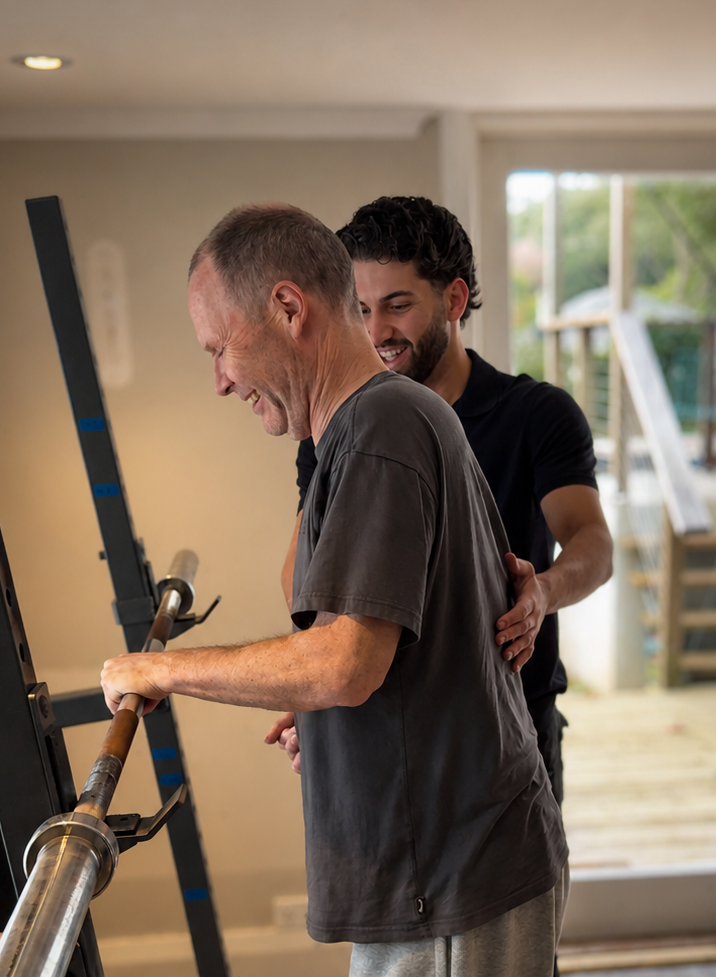
What an AEP does
An Accredited Exercise Physiologist (AEP) holds a university qualification in clinical exercise science and is accredited by Exercise & Sports Science Australia. AEPs are university-qualified allied health professionals who specialise in exercise for people with chronic conditions, injuries and disability - as well as healthy individuals wanting to train well.
Clinical assessment
Reviewing health history, movement, strength, mobility and functional capacity to establish a clear baseline.
Exercise prescription
Designing an individualised program based on evidence, your condition and your goals.
Supervised delivery
Coaching technique, dosage and intensity so exercise is safe and effective.
Education
Explaining how exercise influences your health so you can make informed decisions long term.
Review & progression
Re-assessing regularly and adjusting the program as capacity improves.
Collaborative care
Working with GPs, specialists and other allied health professionals involved in your care.
How exercise helps
Prescribed correctly, exercise is a genuine clinical intervention. It can improve cardiovascular and metabolic health, restore strength and joint function after injury, reduce pain sensitivity, support mental health, protect bone density and maintain the independence that allows people to keep doing what matters to them.
The difference between exercise and clinical exercise is the reasoning behind the training. Type, intensity, volume, frequency and progression are chosen deliberately - and reviewed as your body responds.
For NDIS participants, this work is usually funded under Capacity Building - see the NDIS page or the FAQs for details.
Exercise Physiology questions
What is an Accredited Exercise Physiologist?
An Accredited Exercise Physiologist (AEP) is a university-qualified allied health professional accredited by Exercise & Sports Science Australia who prescribes exercise as a clinical intervention for chronic conditions, injury, disability and general health.
How is Exercise Physiology different from personal training?
The difference is the clinical reasoning behind the training. An AEP assesses health history, movement, strength and functional capacity, then chooses type, intensity, volume, frequency and progression deliberately, reviewing them as your body responds.
Do I need a referral to see an Exercise Physiologist?
No referral is required to book privately. A GP referral is only needed if you intend to claim through Medicare under an eligible pathway such as a Chronic Disease Management plan.
Who benefits from seeing an Exercise Physiologist?
People managing chronic health conditions, rehabilitating from injury, living with disability, returning to exercise after time away, or wanting to build strength with clinical oversight.
What conditions can Exercise Physiology help with?
Prescribed exercise can improve cardiovascular and metabolic health, restore strength and joint function after injury, reduce pain sensitivity, support mental health, protect bone density and maintain independence.